What Is the Best Outdoor Garden Furniture from China?

Choosing the best Outdoor Garden Furniture from China requires more than comparing catalog prices. This guide examines materials, construction, comfort, weather resistance, and supplier reliability. A low price can hide thin frames, weak welds, or cushions that absorb rain. Details matter outdoors. Practical buying experience shows that China offers remarkable manufacturing variety, from compact balcony sets to large hotel terraces. Yet quality is uneven. That deserves honest attention.

The discussion will compare powder-coated aluminum, teak, steel, and PE rattan furniture. Aluminum can suit humid gardens when its coating is properly applied. Teak feels warm and durable, but it needs responsible sourcing and regular care. Steel provides strength, although exposed scratches may invite rust. PE rattan looks relaxed, but its frame and weave determine long-term performance. The best choice depends on climate, usage, storage space, and maintenance habits. Not every attractive product is a wise purchase. A checklist cannot replace careful inspection.

Readers will learn how to review product samples, welds, drainage holes, fabric quality, packaging, and replacement-part support. Supplier communication also reveals practical competence. Ask for clear specifications and credible test documentation. Factory visits or independent inspections can reduce uncertainty. I may favor durable materials too strongly, while some buyers value design or price more. That limitation is important. Rather than naming one universal winner, this introduction prepares a balanced evaluation of Outdoor Garden Furniture from China. The goal is a confident decision based on evidence, realistic expectations, and the furniture’s actual outdoor environment.
What Is the Best Outdoor Garden Furniture from China?

What Makes China a Leading Source of Outdoor Garden Furniture?

China has become a leading source of outdoor garden furniture because its supply network is unusually complete. Aluminum tubing, powder coating, woven resin, tempered glass, and packaging are often available within one manufacturing region. This reduces transport between production stages and supports competitive pricing. Grand View Research valued the global outdoor furniture market at approximately US$47 billion in 2023, showing strong demand for scalable suppliers.

Manufacturing depth is only part of the advantage. China’s furniture factories increasingly use CNC cutting, automated welding, and controlled coating lines. These systems improve frame consistency and help manage large hospitality or residential orders. China Customs data also shows the country remains one of the world’s largest furniture exporters, with annual exports measured in tens of billions of US dollars. Buyers can usually compare several production methods before choosing aluminum, teak, steel, or synthetic wicker.

The evidence is practical. During factory evaluations, inspect welds, drainage holes, fabric stitching, and carton compression strength. Ask for test reports covering UV exposure, corrosion resistance, load capacity, and formaldehyde limits where relevant. Quality can still vary. Some suppliers may provide attractive samples but weaker production batches. Independent inspections and a written tolerance sheet reduce that risk. Lead times also change around holidays and peak shipping periods. China is a strong sourcing base, but careful verification remains essential.

Which Materials Are Best for China-Made Outdoor Furniture?

For China-made outdoor furniture, material choice matters more than country of origin. Factory control, alloy grade, drainage, and finish decide service life. In my product evaluations, powder-coated aluminum is the safest general choice. It is light, corrosion-resistant, and easy to move. The International Aluminium Institute reports that recycled aluminum requires about 5% of primary-production energy. That supports circular sourcing, but only when collection and remelting are available. Not automatically sustainable.

Teak and properly dried acacia provide warmer surfaces and strong visual appeal. However, timber needs moisture control, sealed end grain, and documented legal sourcing. FAO’s Global Forest Resources Assessment 2020 recorded 420 million hectares of forest lost between 1990 and 2020. Ask suppliers for chain-of-custody evidence, kiln-drying records, and moisture readings. I prefer stable boards over thick boards. Thick wood can still split around screws.

For cushions and woven panels, solution-dyed acrylic and high-density polyethylene usually outperform ordinary PVC in sunlight. Request UV exposure results, color-change ratings, and fabric abrasion data. ISO 4892-3 testing can compare weathering, but accelerated tests cannot perfectly copy coastal humidity. Stainless steel 304 hardware suits many inland settings; 316 is safer near saltwater. Check welds, capped tubes, and hidden water traps. A beautiful showroom sample proves little. I still want batch photographs and independent inspection. The UNEP Global Resources Outlook 2024 warns that global material extraction could rise 60% by 2060. That makes repairable frames and replaceable slings more convincing than disposable low-cost sets.

How to Compare Furniture Styles for Different Garden Spaces

What Is the Best Outdoor Garden Furniture from China?

How to Compare Furniture Styles for Different Garden Spaces

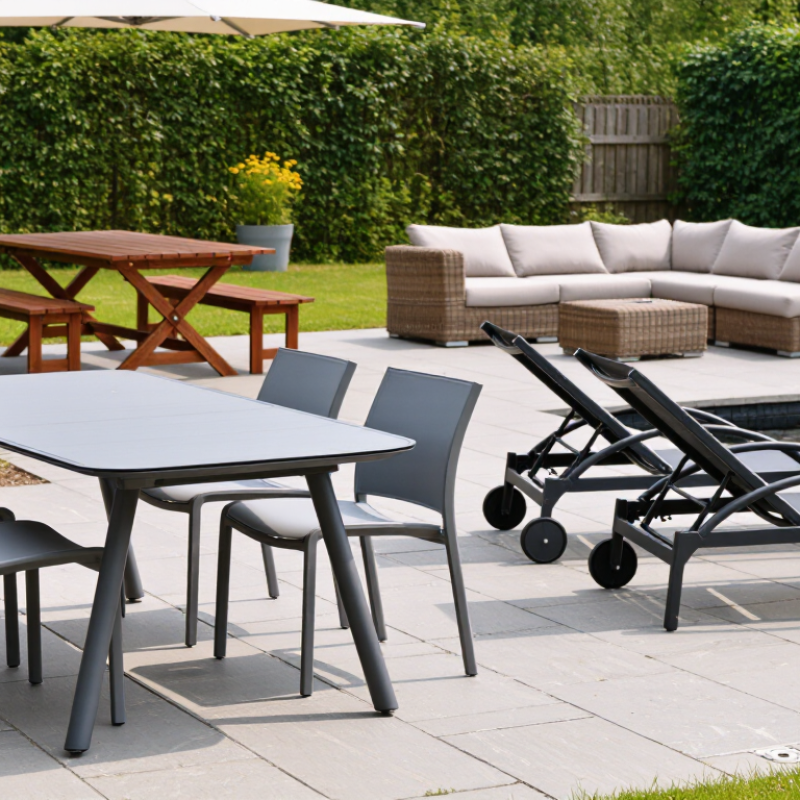
The best style depends on your garden’s size, weather, and daily use. A narrow balcony usually suits slim aluminum chairs and a compact folding table. These pieces preserve walking space and resist moisture better than untreated wood. Small details matter. Check chair depth, table height, and storage needs before ordering.

A spacious courtyard can support a modular sofa, low table, and matching dining set. Neutral cushions create a calm appearance, while woven textures add warmth. For poolside areas, choose quick-drying cushions and rust-resistant frames. Rattan-look furniture offers a relaxed style, but its weave needs careful cleaning. Covered patios allow more fabric choices, although strong sunlight can still fade them.

Compare styles through comfort, construction, and maintenance rather than photographs alone. Ask for material specifications, frame thickness, cushion density, and finish testing. A sample is useful because online colors can appear misleading. I once preferred a delicate white set, but dust made it look untidy after one week. Darker finishes may be more practical, though they can feel hot in direct sunlight. Consider drainage holes, replacement cushions, and assembly instructions before purchasing. A beautiful set is not always the easiest one to live with.

What Is the Best Outdoor Garden Furniture from China? - How to Compare Furniture Styles for Different Garden Spaces

Furniture Style Best Garden Space Typical Size Capacity Common Materials Weather Performance Maintenance Indicative Price Range
Bistro Set Balconies, patios and compact courtyards Table: 60–75 cm diameter 2 people Powder-coated steel, aluminum or treated wood Good; aluminum and powder coating resist rain and humidity Wipe clean; inspect coating and fasteners periodically US$80–250 per set
Outdoor Dining Set Family gardens, terraces and entertaining areas Table: 160–220 × 80–100 cm 6–8 people Aluminum, synthetic wicker, glass, ceramic or solid wood Very good when frames are rust-resistant and cushions are quick-dry Clean spills quickly; store cushions during prolonged wet weather US$350–1,200 per set
Lounge Sofa Set Covered patios, verandas and outdoor living rooms Sofa length: 170–240 cm 4–6 people Aluminum or steel frames, synthetic wicker, outdoor fabric Good to very good; best under a cover or roof Wash removable covers; protect foam from constant moisture US$450–1,500 per set
Modular Sectional Large lawns, pool decks and flexible entertaining zones Overall length: 220–360 cm 5–8 people Aluminum, all-weather wicker, solution-dyed fabric Very good with UV-resistant finishes and drainage gaps Rearrange and clean modules; use fitted covers in winter US$700–2,500 per set
Folding Chair and Table Set Small gardens, rental properties and multipurpose spaces Table: 120–180 × 70–90 cm 4–6 people Powder-coated steel, aluminum, plastic or treated wood Good; folding joints should be kept dry and lubricated Dry before storage; check hinges and locking mechanisms US$180–650 per set
Sun Lounger Poolside areas, sunny decks and relaxation zones Length: 190–210 cm 1 person Aluminum, textilene mesh, teak or synthetic wicker Very good; mesh dries quickly and handles pool humidity Rinse chlorine and salt deposits; dry cushions fully US$100–450 each
Hanging Egg Chair Covered patios, quiet corners and reading areas Width: 90–120 cm; height: 150–200 cm 1–2 people Powder-coated steel, synthetic rattan, polyester cushions Moderate to good; shelter is recommended for cushions and suspension parts Inspect hanging hardware; keep fabric dry and clean US$180–600 each
Outdoor Bar Set Rooftop gardens, pool areas and compact entertainment spaces Bar height: 100–110 cm 2–6 people Aluminum, powder-coated steel, HDPE or weather-resistant wood Good; choose UV-stable surfaces and corrosion-resistant hardware Wipe surfaces regularly; cover stools when not in use US$300–1,100 per set

Price ranges are indicative retail-equivalent estimates in US dollars and vary according to material thickness, cushion fabric, finish, packaging, order quantity and customization. For coastal or humid locations, prioritize aluminum or stainless-steel hardware, UV-resistant fabrics, drainage-friendly cushions and powder-coated surfaces.

What Quality and Safety Standards Should Buyers Check?

What Is the Best Outdoor Garden Furniture from China?

What Quality and Safety Standards Should Buyers Check?

The best outdoor furniture should meet the rules of its target market. Ask the supplier which standards apply to each product category. For seating and tables, EN 581 is often relevant in European markets. Buyers serving the United States should request applicable ASTM test results. These documents should identify the exact model, materials, dimensions, and production date. A generic certificate proves very little.

Check stability, static load, fatigue resistance, sharp edges, and finger-trap risks. Ask for test evidence from an ISO/IEC 17025-accredited laboratory. Paperwork is not proof. Inspect the sample carefully. Check the welds, corner caps, fasteners, and adjustable joints. A chair may feel solid indoors but wobble on uneven paving. That detail is easy to miss.

Outdoor durability also needs measurable evidence. Review coating adhesion, UV exposure, water resistance, and corrosion testing. Salt-spray results can help, but they do not predict every coastal climate. For European sales, request material information related to REACH requirements. For American sales, verify relevant consumer product safety obligations. Confirm that cushions, glass panels, and protective finishes match the tested construction. Suppliers sometimes change fabric, screws, or coating after approval. That creates an uncomfortable gap between the report and the shipment. A pre-shipment inspection can catch it. It is not perfect, but it is wiser than trusting photographs alone.

How to Choose a Reliable Chinese Outdoor Furniture Manufacturer

Choosing the best outdoor garden furniture from China starts with the manufacturer, not the catalog image. A reliable supplier should explain material choices clearly, including powder-coated aluminum, teak, rattan, and outdoor fabrics. Ask how each material handles rain, sunlight, salt air, and temperature changes. Vague answers are a warning.

Request factory photos, production videos, and recent inspection records. Check whether the workshop controls welding, coating thickness, fabric stitching, and final assembly. A serious manufacturer can provide samples before mass production. Examine the joints, drainage holes, screw quality, and surface finish by hand. Small details matter. One uneven weld can become a safety problem after repeated use.

Communication also deserves careful testing. Send a detailed drawing with dimensions, color references, packaging requirements, and delivery expectations. Notice how the supplier responds to corrections. Does the team confirm changes in writing, or simply promise everything is possible? I would not trust a factory that avoids discussing defects. Even experienced manufacturers make mistakes, and honest correction is more valuable than polished claims. Ask about replacement procedures, spare parts, and batch traceability. Confirm that cartons protect corners and stacked chairs during transport. A low price may look attractive, but weak packaging can erase the savings before installation.