How to Choose the Best Metal Outdoor Furniture for Your Space?
When choosing Metal Outdoor Furniture, it's crucial to consider both style and durability. According to a report by the Outdoor Furniture Association, metal furniture has seen a 20% increase in popularity over the last five years. This growth is attributed to its resilience and classic aesthetic. However, not all metal options are created equal.
Aluminum is lightweight and rust-resistant, making it a smart choice for humid climates. On the other hand, wrought iron offers sturdiness but may require more maintenance. In a survey, 66% of consumers express concerns about longevity when selecting metal outdoor furniture. It's vital to reflect on your specific needs and environment before making a decision.
Color and finish also matter. A powder-coated finish can add a pop of color while ensuring protection against the elements. Yet, many fail to consider how the furniture will fit in with their overall outdoor space. Balancing aesthetics and functionality is a delicate task, but worth the effort.
Factors to Consider When Choosing Metal Outdoor Furniture
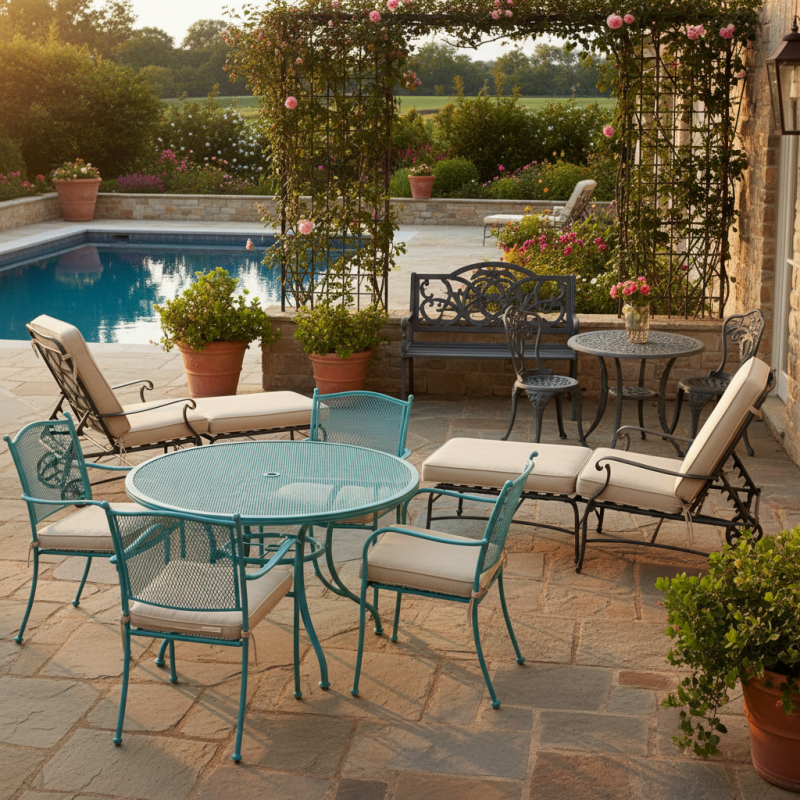
Choosing metal outdoor furniture can be overwhelming. There are several key factors to think about. Start with the material type. Aluminum is lightweight but can be less durable. Steel, on the other hand, offers durability but may rust if not coated properly. Understand your climate too. For coastal areas, choose rust-resistant metals.
Consider the design and style. Do you want modern or classic? Match the furniture with your home's aesthetics. Comfort is vital. Test the seating and check for cushion options. Lastly, think about storage. Some pieces are stackable or foldable, making them easier to store. Reflect on your choices and ensure they meet your needs.
Factors to Consider When Choosing Metal Outdoor Furniture
Types of Metal Materials for Outdoor Furniture: Pros and Cons
When choosing metal outdoor furniture, understanding the types of materials is crucial. Aluminum is lightweight and resistant to rust. It can be painted to match different styles. However, it may not be as durable in windy areas. Accessibility for cleaning should be considered as dirt can accumulate in corners.
Steel is strong and sturdy, making it ideal for heavy use. It can withstand various weather conditions but is prone to rust if not treated. A coat of paint helps, yet it may require regular maintenance. Look for stainless steel if you want better resistance to the elements.
Wrought iron is another option, known for its elegance and strength. It adds a classic touch to any space. However, it can be quite heavy and may require extra effort to move. Its susceptibility to rust means regular checks and care are necessary. Balancing aesthetics with practicality is vital when selecting your metal furniture.
How to Choose the Best Metal Outdoor Furniture for Your Space? - Types of Metal Materials for Outdoor Furniture: Pros and Cons
| Metal Type |
Pros |
Cons |
Best For |
| Aluminum |
Lightweight, rust-resistant, low maintenance, easy to move. |
Can bend or dent easily, may not be as durable as heavier metals. |
Casual settings and smaller spaces. |
| Steel |
Strong and sturdy, provides excellent support, versatile styles. |
Heavy, prone to rust if not treated, may require more maintenance. |
Long-lasting and traditional styles. |
| Wrought Iron |
Very durable, classic design, can handle various weather conditions. |
Very heavy, can rust, may require regular maintenance. |
Traditional and formal outdoor settings. |
| Stainless Steel |
Highly resistant to rust and corrosion, modern look, strong. |
Can be expensive, may lose heat in cold weather. |
Modern and contemporary outdoor spaces. |
Design Styles of Metal Outdoor Furniture to Match Your Space
When selecting metal outdoor furniture, consider design styles that complement your existing space. According to industry reports, about 42% of homeowners prefer contemporary designs. These styles often feature clean lines and minimalistic aesthetics, perfect for modern gardens or patios. Intricate metalwork can add a touch of elegance to rustic spaces, accommodating varying tastes and preferences.
For a cohesive look, match colors and finishes with your outdoor decor. A sleek aluminum set can enhance a vibrant, tropical theme, while wrought iron brings a classic charm to a traditional garden. Color choice plays a crucial role, as lighter shades may create an airy feel in smaller spaces, and darker hues can add depth to expansive areas.
**Tips:** Choose weather-resistant materials. It ensures durability in different climates. Also, consider the maintenance level each style requires. Some designs may demand higher upkeep. It's essential to balance aesthetics and practicality. Remember, mismatched styles can lead to a disjointed appearance. Evaluate your choices carefully.
Maintenance Tips for Keeping Metal Outdoor Furniture in Great Condition
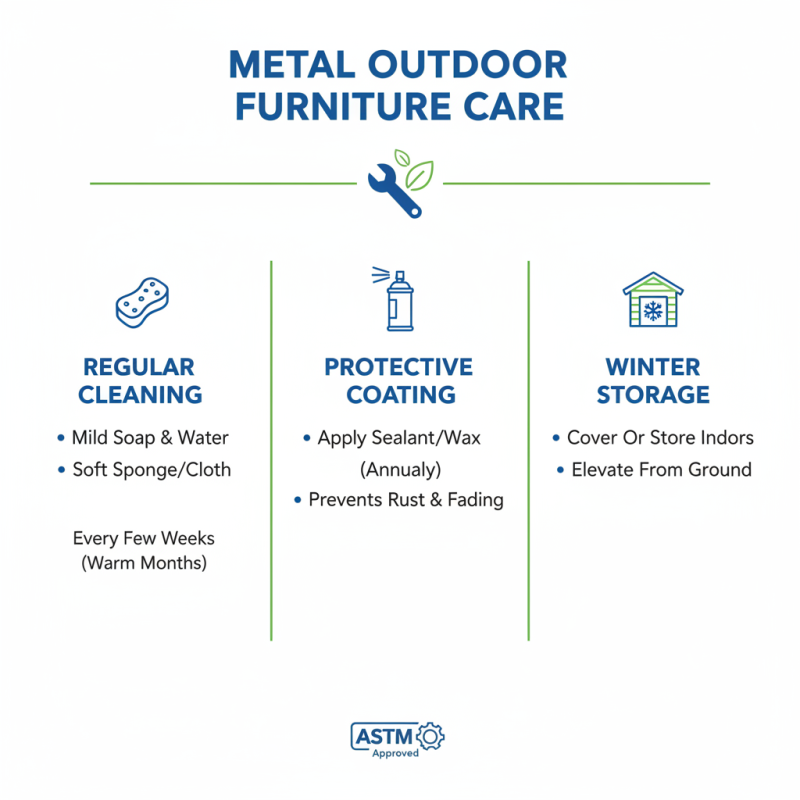
Keeping metal outdoor furniture in great condition requires consistent maintenance. One important tip is regular cleaning. Using a mild detergent mixed with water is effective. A soft sponge can remove dirt without scratching the surface. The American Society for Testing and Materials suggests cleaning your metal furniture every few weeks during warm months. Dust and grime can accumulate quickly, especially in outdoor settings.
Another essential aspect is preventive care. Sometimes, furniture can develop rust. According to industry reports, nearly 20% of metal furniture suffers from corrosion after just one season outdoors. Applying a protective sealant once a year can help prevent this issue. Inspect your furniture for wear and tear. Look for chipped paint or exposed metal. Address these problems early to avoid costly repairs later.
Storage is also crucial. When winter arrives, protect your furniture. Using covers can reduce exposure to harsh weather. If possible, store metal pieces indoors to prolong their lifespan. A humid environment can lead to rust, while extreme heat can warp your furniture. Evaluate your space and storage options carefully. This small effort can result in a significant increase in durability and appearance.
Budgeting for Metal Outdoor Furniture: Cost vs. Quality Considerations
Budgeting for metal outdoor furniture requires careful consideration. You want quality, but you also need to stay within your budget. A common mistake is overlooking maintenance costs. Remember that cheaper furniture may require more upkeep. Invest a little more for durable options that require less care over time.
When shopping, be realistic about your spending. Create a budget that reflects both your needs and wants. Look for materials that can withstand weather changes. Aluminum and steel are popular due to their durability. However, they can vary in cost significantly.
Tips: Search for sales or clearance sections. You might find high-quality pieces at a lower price. Consider second-hand options. Sometimes, well-maintained furniture can be a great deal. Don’t forget to ask about warranties. A good warranty reflects the manufacturer’s confidence in their product.